
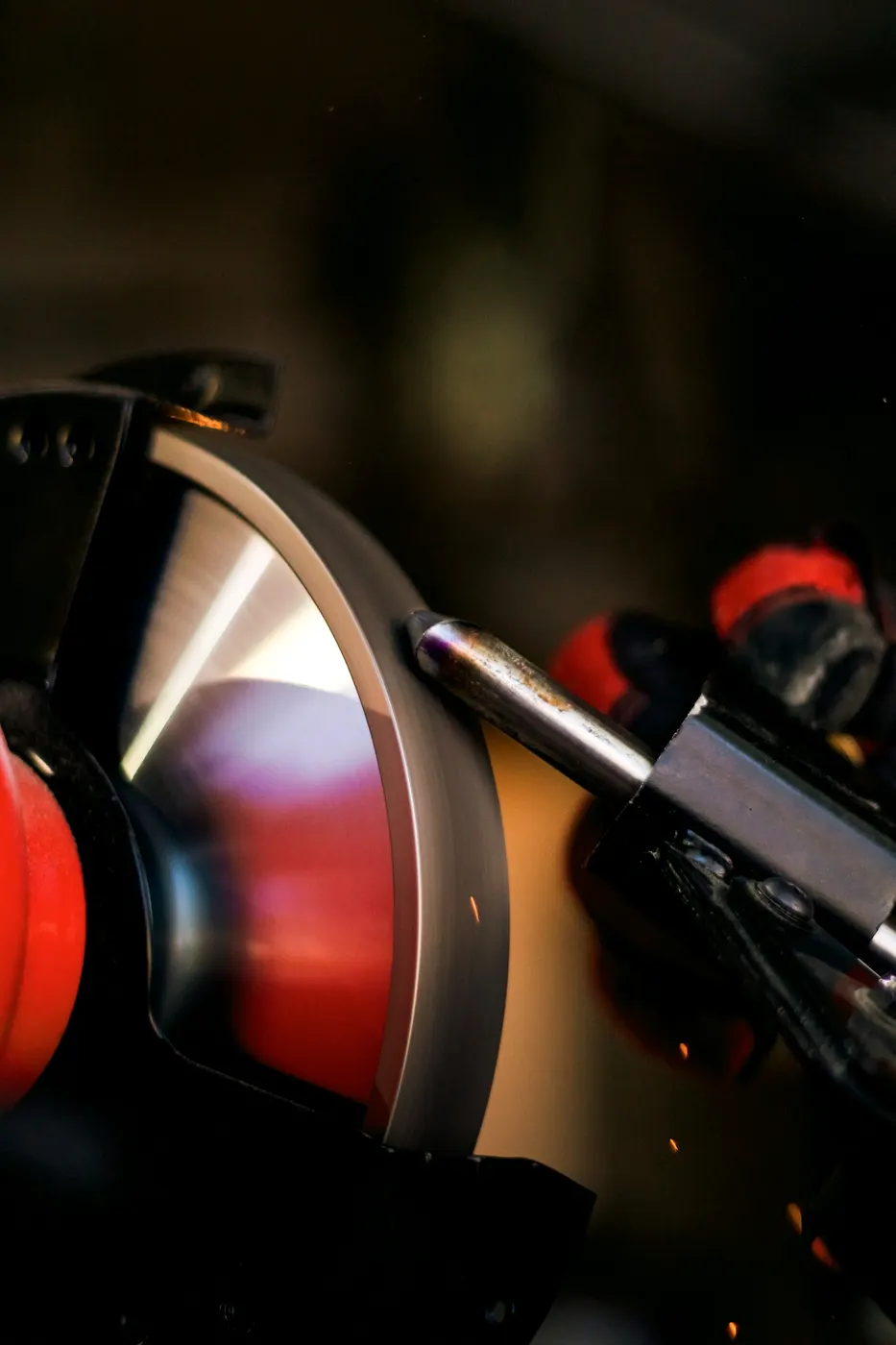
A flap disc grinds and finishes in one tool. Overlapping abrasive flaps wear away as you work, exposing fresh grain, so one disc can take a weld down and leave the surface ready for paint. Choose the wrong one and you burn through discs, blue the workpiece, or leave scratches the next step cannot remove.
Every flap disc carries the same three specs: what the grain is made of, how coarse it is, and the shape of the disc. Get those right for the material and the job, and the rest is price and availability.
Grain: what the flaps are made of
- Aluminium oxide. The entry-level grain. It cuts mild steel and general metals at a lower price per disc but dulls faster under heavy pressure. Fine for light blending and maintenance work.
- Zirconia alumina. The workhorse for fabrication. Tougher than aluminium oxide and built for high removal on edges and weld seams. Klingspor's SMT 624 Supra, for example, is a zirconia disc rated for both steel and stainless.
- Ceramic aluminium oxide. The grain for heavy grinding and for stainless. Its microcrystalline structure fractures as it blunts, exposing a fresh cutting edge, so the cut stays consistent for the life of the disc. It costs more per disc and pays back on high-pressure, high-volume work.
Some discs add a grinding aid to the flaps. Klingspor calls its version multibond: it stops material sticking to the grain, which keeps the cut cooler and helps prevent heat discolouration on stainless. The SMT 996 Special pairs ceramic grain with multibond for exactly that job.
Grit: how coarse to go
Lower numbers are coarser. A coarse disc removes material fast and leaves deep scratches. A fine disc removes slowly and leaves a smoother surface. Most fabrication shops work within four grades.
| Grit | Typical use |
|---|---|
| 40 | Heavy stock removal: taking welds down, bevelling plate |
| 60 | General grinding and weld blending, the all-rounder for most shops |
| 80 | Blending and light finishing before paint or powder coat |
| 120 | Fine finishing, preparing for a polish or satin finish |
Work through the grades one step at a time. Jumping from 40 straight to 120 leaves deep scratches the finer disc cannot reach, and the job takes longer, not shorter.
Shape: Type 27 flat or Type 29 conical
- Type 27, flat. The flaps sit nearly flat to the backing. Run it at a shallow angle, roughly 0 to 15 degrees, for blending and finishing on flat surfaces. It leaves a more even finish.
- Type 29, conical (also called convex). The flaps are set at an angle, 12 degrees on Klingspor's SMT 624. Run it steeper, roughly 15 to 25 degrees, for aggressive removal on welds, edges, pipe and curved work.
If a shop stocks one shape for weld removal, it is usually Type 29. Where finish matters, add Type 27 in the finer grits.
Stainless steel needs its own discs
Stainless resists rust because of a thin chromium oxide layer on its surface. The wrong abrasive damages that layer in three ways.
- Contamination. Iron, sulphur or chlorine in the disc can be left behind on the surface and start rust spots or pitting, sometimes weeks after the job has left the shop. Discs rated INOX are made without these fillers. Pferd POLIFAN flap discs carry the INOX rating for this reason.
- Cross-contamination. A disc that has touched mild steel carries iron particles. Keep stainless discs separate, mark them, and never move a disc from carbon steel to stainless.
- Heat. Stainless conducts heat poorly, so the heat stays where you grind. Too much pressure or a worn disc leaves blue and straw heat tint, and heat tint lowers corrosion resistance. Ceramic grain with a cooling additive, a lighter touch and keeping the disc moving all help.
Speed and safety
- Use the disc size the grinder and its guard were built for, and keep the guard on.
- Check the maximum speed printed on the disc against the grinder's no-load speed. The disc's rating must be equal to or higher than the machine's.
- Replace the disc once the flaps wear down to the backing. Grinding on the backing scores the work and overheats it.
- Wear eye and hearing protection and gloves, and a P2 respirator for extended grinding.
A starting kit for a fab shop
| Job | Disc |
|---|---|
| Weld removal on mild steel | Zirconia, Type 29, 40 or 60 grit |
| Blending before paint | Zirconia, Type 27, 80 grit |
| Heavy grinding on stainless | Ceramic with cooling additive, INOX-rated, Type 29, 40 or 60 grit |
| Finishing stainless | INOX-rated, Type 27, 80 to 120 grit |